Selling a property with structural cracks in the Cape Town is possible - but it comes with challenges that must be handled carefully.
Cracks immediately raise concerns for buyers, and if not managed properly, they can:
• Reduce your selling price
• Delay the sale
• Cause deals to fall through
The Reality of Selling with Cracks
Most buyers assume cracks mean:
• Structural problems
• High repair costs
• Risk
Even minor cracks can create doubt.
Legal Disclosure Requirements
Sellers are generally required to disclose known defects.
Failing to disclose:
• Can lead to legal disputes
• May result in financial claims after sale
Types of Cracks and Their Impact
Minor Cosmetic Cracks
• Less impact
• Easier to manage
Structural Cracks
• Major concern
• Require explanation and documentation
The Best Strategy for Sellers
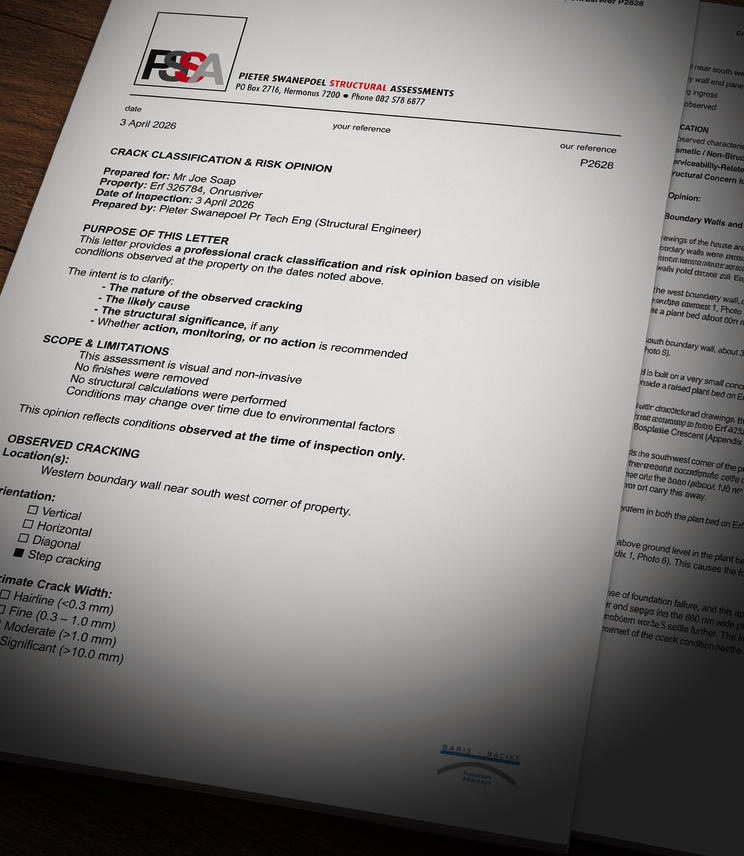
1. Get a Structural Assessment First
This is the most important step.
A professional assessment:
• Identifies the cause
• Determines severity
• Provides clarity
2. Provide a Report to Buyers
A structural engineer’s report:
• Builds trust
• Reduces uncertainty
• Speeds up decision-making
3. Be Transparent
Transparency:
• Prevents future disputes
• Builds buyer confidence
Pricing Impact
Properties with structural issues may:
• Sell at a lower price
• Take longer to sell
But proper documentation can reduce this impact.
Common Mistakes Sellers Make
• Ignoring cracks
• Hiding defects
• Providing no professional assessment
FAQ
Should I fix cracks before selling?
Depends on severity—get professional advice first.
Conclusion
Selling a house with cracks is possible—but handling it correctly is critical. A structural assessment provides clarity, protects you legally, and helps you achieve the best possible outcome.
Not sure if your property has structural issues - make contact now.